Tionne Watkins: TLC Legend T-Boz, Health Battles, Solo Work, and Legacy Today
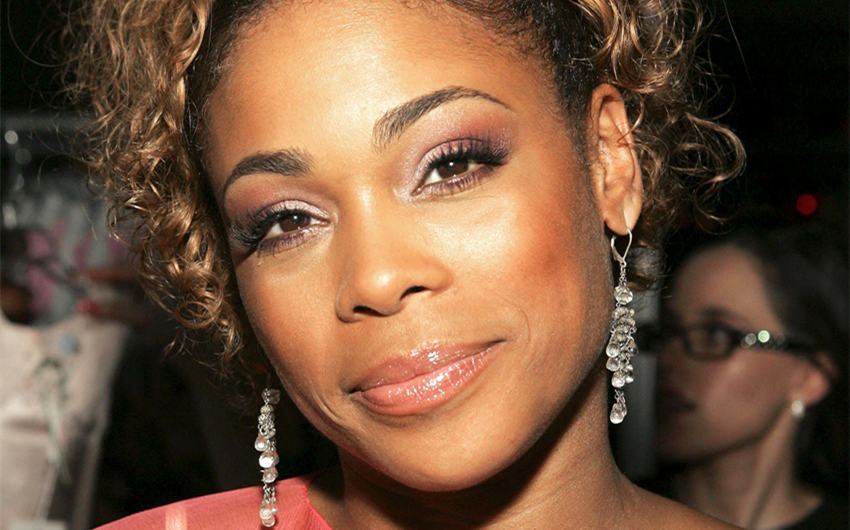
Tionne Watkins is one of those artists you recognize instantly—even if you don’t realize you’re recognizing her. As “T-Boz” in TLC, she helped shape the sound, style, and attitude of ’90s R&B and pop, then kept evolving through solo projects, acting work, and relentless advocacy tied to her own health journey. If you’re here to understand who she really is beyond the hits, this is the full picture.
Who Is Tionne Watkins?
Tionne Tenese Watkins, better known as T-Boz, is a singer, songwriter, and actress who rose to global fame as a founding member of TLC. She was born on April 26, 1970, in Des Moines, Iowa, and later grew up largely in Atlanta, Georgia. That Atlanta connection matters, because TLC’s identity—music, fashion, slang, attitude—came from a specific cultural moment where Southern hip-hop, R&B, and street style were becoming mainstream without losing their edge.
T-Boz’s voice is a huge part of why TLC never sounded like a copy of anyone else. She brought a raspy, cool-toned delivery that cut through glossy production like a signature. Where some singers chase vocal fireworks, T-Boz made understatement feel powerful. Her tone sounded lived-in, like a friend telling you the truth instead of a performer trying to impress you.
How TLC Formed and Why T-Boz Was the “Cool” Anchor
TLC formed in Atlanta in the early 1990s and became a cultural force almost immediately. The group’s dynamic worked because each member brought a distinct energy, but they still felt like one unit. T-Boz was often framed as the “cool” one—steady, grounded, and a little unimpressed by the nonsense around her. That persona wasn’t just branding; it showed up in the music. Her vocal presence often anchored songs that could have become overly sweet or overly chaotic.
Even when the group’s production shifted—from early new jack swing energy to smoother, more mature R&B—T-Boz’s voice stayed a constant. You could drop her into a mid-tempo groove, a radio-pop hook, or a harder hip-hop leaning track, and it still felt like TLC.
The Albums That Made TLC Untouchable
TLC’s run is impossible to summarize without talking about the albums that turned them from popular to historic. The major landmark is CrazySexyCool (1994), a record that balanced fun, confidence, and real-life messaging without sounding preachy. It gave you club-ready singles, slow-burn R&B, and social commentary in the same package—something most groups can’t pull off without feeling scattered.
Then came FanMail (1999), which hit at the exact moment pop and R&B were colliding with futuristic production. That album didn’t just keep them relevant; it pushed them forward. You could feel the era shifting in real time, and TLC didn’t get left behind. They helped drive the shift.
Across their biggest records, T-Boz’s presence stayed essential. She made the “cool” feel believable, not costume-like. Her voice carried confidence without sounding like she was trying to prove anything.
Grammys, Records, and Why TLC’s Legacy Still Holds
TLC’s accolades are the kind that don’t happen by accident. They became the best-selling American girl group of all time, won multiple major awards, and stacked hits that still get played like they came out yesterday. They weren’t a short trend. They were a blueprint.
And even after tragedy reshaped the group, their legacy didn’t freeze. T-Boz and Chilli continued performing as TLC, honoring what the group was while still moving forward. That’s a difficult line to walk—respecting history without turning into a museum exhibit—and it’s one they’ve managed through decades of changing music culture.
Tionne Watkins’ Health Journey: Sickle Cell and Survival
You can’t tell Tionne Watkins’ story honestly without talking about health, because she has lived with sickle cell disease since childhood. Sickle cell is not a “background detail” in her life. It’s pain, fatigue, hospitalization, and constant management—often while working in an industry that rewards nonstop output and punishes vulnerability.
What makes her story hit harder is that her success wasn’t built on perfect conditions. She built it while dealing with a serious chronic illness, and she has used her platform to raise awareness and advocate for better understanding of sickle cell and the realities people live with behind the scenes.
The Brain Tumor Chapter and the Comeback Mindset
Another major health chapter in T-Boz’s life involved a brain tumor and the difficult recovery that followed. She has spoken publicly about how serious and frightening that period was, including the risks involved and the aftermath of surgery and rehabilitation. This wasn’t a quick “celebrity scare” that disappeared in a week. It was a long process of fighting to get back to normal function and back to the life she wanted.
The bigger point is what it says about her: she’s a survivor in the most literal sense. It’s easy to celebrate an artist for a great album. It’s harder—and more meaningful—to recognize the resilience behind continuing to create and perform after your body has tried to shut you down.
Solo Music, Features, and the T-Boz Identity Outside TLC
Even though TLC is her most famous platform, Tionne Watkins has also had solo music moments and features that remind you she isn’t only “part of a group.” Her solo work tends to carry the same qualities fans love in TLC: personality, edge, and a voice that doesn’t blend into the crowd.
What’s interesting is that she never tried to become a completely different person as a solo artist. She didn’t chase a reinvention that erased what made her special. She leaned into her strengths: tone, attitude, and authenticity.
Acting and TV Work
T-Boz has also built an acting résumé over the years, appearing in television and film projects that kept her visible outside music. She has taken roles that range from guest spots to more involved appearances, showing she’s comfortable on camera in a different way than performance.
This part of her career is often overlooked because TLC’s legacy is so massive, but it’s still important. It shows range. It also shows curiosity—she didn’t stop growing once the music fame was secured.
Personal Life and Motherhood
Tionne Watkins is also a mother, and that part of her life has always been handled with more privacy than the average celebrity narrative. She has shared some major milestones publicly, but she hasn’t turned family life into a constant storyline. That boundary fits who she has always been: open about what matters, guarded about what should remain personal.
If you’re looking for drama, her story isn’t built around it. It’s built around work, survival, and long-term relevance—three things that take real discipline.
Why Tionne Watkins Still Matters
Tionne Watkins matters because TLC helped rewrite what a girl group could be—smart without being stiff, sexy without being packaged for male approval, fun without being empty. And inside that, T-Boz mattered because she was the grounding force: the voice that made confidence feel real, the presence that made the group feel balanced, and the personality that made “cool” feel like a lived truth.
Her impact also goes beyond music. When you watch her talk about health, advocacy, recovery, and the reality of pushing forward anyway, you’re seeing a different kind of icon story—one that isn’t built on perfection, but on persistence.