Flowers That Symbolize Death: Meanings, History, and Cultural Significance
When you search for “flowers that symbolize death,” you’re likely exploring the deep connections between blossoms and mourning, remembrance, or the afterlife. For centuries, flowers have played an important role in funerals and memorial rituals, helping people express emotions that words cannot. Some flowers are associated with grief and loss, while others symbolize eternal love, rebirth, or peace in the afterlife.
Understanding the meaning behind these flowers can help you choose the right arrangement for honoring someone’s memory or appreciating the symbolism that cultures attach to them. This article explores the most well-known flowers that represent death, their meanings, and how different societies have used them to communicate remembrance and respect.
The Role of Flowers in Death and Mourning
Flowers have always been intertwined with human emotion. They are used to celebrate birth, love, and joy — but also to express sympathy and farewell. Their fleeting beauty mirrors the fragile nature of life, making them powerful symbols of both mortality and renewal.
In funerals and memorials, flowers are used not just for decoration but as emotional expressions. They can bring comfort, offer hope, and convey unspoken messages of respect and remembrance. In many cultures, certain flowers are chosen specifically because of their association with death or the spirit world.
Interestingly, while some flowers symbolize mourning and loss, others represent resurrection and eternal life. The type of flower, its color, and its cultural context all influence what it means when offered in times of death.
Lilies – Purity, Renewal, and the Soul’s Rebirth
One of the most common flowers seen at funerals, lilies symbolize purity and the restored innocence of the soul after death. White lilies, in particular, are known as “funeral flowers” in Western traditions. Their strong yet delicate fragrance and radiant white petals make them a favorite choice for conveying peace and spiritual rebirth.
In Christian symbolism, the lily is associated with the Virgin Mary and resurrection. It often appears in Easter services, representing Christ’s victory over death. Spiritually, lilies remind mourners that death is not the end, but a transformation — a soul returning to innocence.
Chrysanthemums – Mourning and Respect Across Cultures
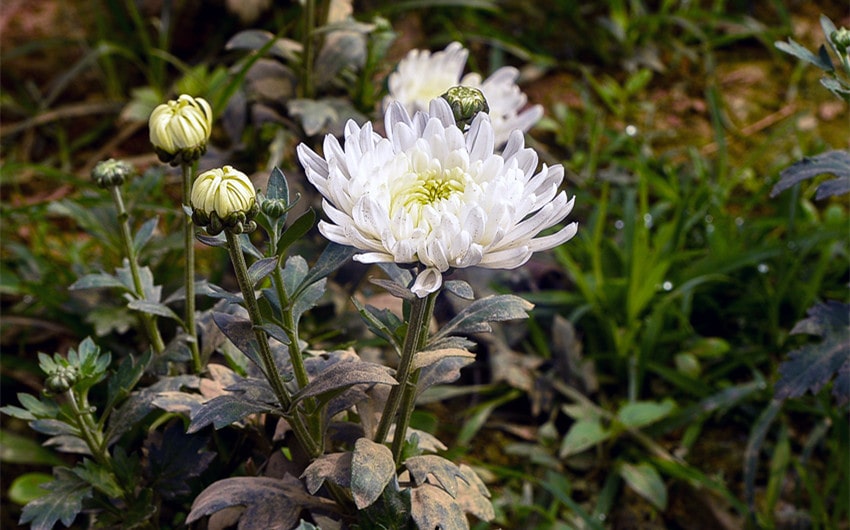
Chrysanthemums, or “mums,” hold vastly different meanings depending on where you are in the world. In most Western countries, they symbolize death and grief, especially in Europe, where they are exclusively used for funerals and gravesites. In France, Italy, and Belgium, chrysanthemums are placed on tombs during All Saints’ Day to honor the dead.
However, in Asia, chrysanthemums carry a more nuanced meaning. In Japan, they are associated with the Imperial family and longevity, while in China they represent nobility and honor. Yet even there, white chrysanthemums are used for mourning and remembrance, reflecting sincerity and lament.
Marigolds – The Flower of the Dead in Mexican Tradition
In Mexico, marigolds (known as cempasúchil or “flower of the dead”) hold a sacred place in the Día de los Muertos (Day of the Dead) celebrations. The Aztecs believed marigolds guided spirits back to the world of the living with their bright orange and yellow hues and strong scent.
During the Day of the Dead, families decorate altars and graves with marigolds, candles, and food offerings to welcome loved ones’ spirits. Spiritually, marigolds symbolize the cycle of life and death — not as something to fear, but as a natural continuation of existence. Their fiery color represents both the sun and the eternal light of the soul.
Red Roses – Love That Transcends Death
Though roses are most commonly associated with romance, they also hold deep meaning in the context of loss. Red roses symbolize enduring love even after death — the kind of devotion that continues beyond life’s end. Placing red roses on a grave signifies that the bond shared in life remains unbroken.
White roses, on the other hand, symbolize purity and reverence, while dark crimson roses often represent sorrow or grief. In many memorial traditions, roses express not only love but also hope for reunion in the afterlife.
Carnations – Remembrance and Eternal Affection
Carnations are another classic funeral flower, rich in symbolism and history. Different colors convey different meanings:
- Red carnations express admiration and deep love.
- White carnations symbolize pure love and innocence.
- Pink carnations are often associated with remembrance and a mother’s undying love.
In Catholic tradition, pink carnations are said to have first bloomed where the Virgin Mary’s tears fell at Jesus’ crucifixion, giving them a sacred connection to mourning and maternal grief.
Orchids – Eternal Love and Beauty That Outlasts Death
Orchids may not seem like traditional funeral flowers, but they carry profound symbolism of eternal love and strength. Their exotic beauty represents resilience — the idea that even in sorrow, there is enduring grace.
White and pink orchids are commonly used in sympathy arrangements, symbolizing everlasting love and remembrance. In Eastern beliefs, orchids are also tied to the soul’s immortality, making them a meaningful choice for honoring someone who lived with beauty and integrity.
Poppies – Sleep, Peace, and Remembrance
Poppies have long been symbols of death and remembrance, particularly red poppies, which are worn on Remembrance Day to honor fallen soldiers. Their association with death originates in ancient Greek mythology, where poppies were sacred to Hypnos and Thanatos — the gods of sleep and death.
In this context, poppies symbolize eternal rest and the peace that comes after life’s struggles. The blood-red color also reflects both sacrifice and rebirth — a poignant emblem for honoring lives lost in war or tragedy.
Black Roses – Farewell, Mystery, and the End of a Cycle
Though naturally rare, black roses are often dyed or bred to appear dark purple or deep red. They symbolize death, farewell, and transformation. In literature and gothic symbolism, black roses often represent the end of a journey or the acceptance of mortality.
While some view them as symbols of mourning, others see them as emblems of rebirth — the closing of one chapter and the start of another. They are a striking, modern choice for memorial tattoos, art, and ceremonies that embrace both darkness and beauty.
Calla Lilies – Elegance, Transition, and Purity of Spirit
Calla lilies are elegant flowers often seen in funeral settings. Their trumpet-like shape represents the call of the soul to the divine. White calla lilies symbolize purity and transition, making them a common choice for commemorating a peaceful passing.
In art and literature, calla lilies also symbolize rebirth — their simple yet graceful form suggesting the beauty of the soul moving on from the physical world.
Gladiolus – Strength and Moral Integrity
While not as commonly associated with death as other flowers, gladiolus are often included in sympathy arrangements because they symbolize strength of character and moral integrity. The flower’s tall, upright stalks represent resilience and remembrance of someone who stood firm in life’s trials.
In funerals, gladiolus can express admiration and respect for the deceased, honoring their courage and steadfastness.
Hyacinths – Sorrow, Regret, and Deep Emotion
Hyacinths are rich with mythological associations, originating from the Greek story of Hyacinthus, a youth accidentally killed by Apollo and later transformed into the flower bearing his name. Because of this myth, hyacinths symbolize sorrow and the pain of loss.
Purple hyacinths, in particular, represent deep regret and mourning. Despite their tragic symbolism, their fragrance and beauty also express a sense of love and remembrance, making them fitting for funerals and memorials.
Cultural Views on Flowers and Death
Around the world, flowers have unique meanings in relation to death:
- In China, white flowers symbolize mourning and are used in funerals, while bright colors are avoided.
- In Korea and Japan, white chrysanthemums are symbols of lamentation and purity of the deceased soul.
- In Hinduism, marigolds are used during funeral rites as offerings to the gods.
- In Victorian England, floral arrangements called “funeral wreaths” were designed to convey specific emotional messages through the language of flowers, or floriography.
Even today, these traditions persist, showing how flowers continue to connect human emotion with the spiritual journey beyond life.
The Dual Nature of Death Flowers: Grief and Hope
While flowers that symbolize death are often seen as somber, their meanings are not purely sorrowful. Many carry a dual message — mourning and remembrance, but also renewal, hope, and the beauty of life’s cycle.
Their ephemeral nature reminds us that life is brief but meaningful, and that beauty can exist even in loss. Whether placed on a grave, worn as a tribute, or chosen as a tattoo, these flowers offer comfort and continuity — a symbol that love and memory never truly fade.