Coffee Meets Bagel Founders Net Worth Estimates: What the Kang Sisters Could Be Worth
If you’re searching coffee meets bagel founders net worth, you’re probably trying to figure out how wealthy the Kang sisters really are after building one of the most recognizable “serious dating” apps in the world. The short version is this: their wealth is mostly private and mostly estimated, because Coffee Meets Bagel is a private company and the sisters’ exact ownership stakes aren’t publicly disclosed. Still, you can make a realistic, defensible estimate by looking at the company’s valuation history, fundraising, and how founder equity typically gets diluted over time.
Who founded Coffee Meets Bagel
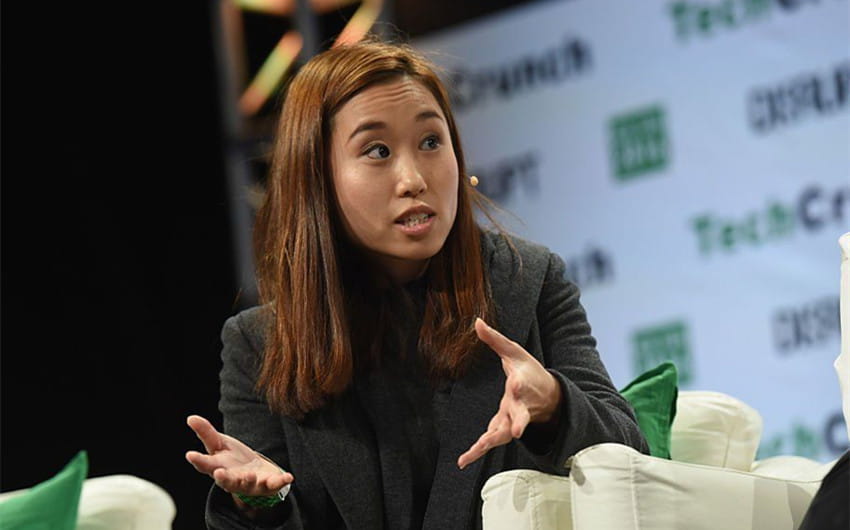
Coffee Meets Bagel was founded by three sisters: Arum Kang, Dawoon Kang, and Soo Kang. The trio became widely known after their memorable appearance on Shark Tank, where they famously turned down a massive buyout offer and chose to keep building the company.
If you’ve ever wondered why people remember their pitch years later, it’s because it wasn’t just a “dating app” story. It was a “we’re playing the long game” story—and that has big implications for their net worth today.
Why founder net worth is hard to pin down for a private company
When a company is publicly traded, you can estimate founder wealth by looking at stock holdings and market price. With Coffee Meets Bagel, you don’t get that transparency.
That means any “net worth” number you see online is usually based on assumptions about:
- The company’s estimated valuation
- How much equity the founders still own after funding rounds
- Whether they’ve taken cash out (secondary sales)
- How much they’ve earned in salary over the years
- How much they’ve personally invested or diversified
So when you see one site claiming the founders are worth billions, treat it as entertainment unless there’s proof. Dating-app founders don’t magically become billionaires without a major public exit, IPO, or acquisition that you can actually verify.
The Shark Tank moment that set the baseline
The easiest public benchmark is Shark Tank. On the show, the founders asked for $500,000 for 5%, which implies a $10 million valuation at the time. Mark Cuban then floated a $30 million offer to buy the entire company, which they declined.
Even if you don’t care about reality TV, that moment gives you two important clues:
- Investors already saw meaningful potential early.
- The founders believed the long-term value could be far higher than the biggest offer on the table.
If you’re trying to understand their net worth today, this is the “origin point” for the company’s public valuation story.
What the company could be worth now
Because Coffee Meets Bagel is private, you’ll see a range of estimated valuations in business databases and media summaries. A common figure that shows up repeatedly in recent years is around $150 million (often paired with revenue estimates), while other outlets speculate higher.
Here’s the practical way to think about it: the founders’ net worth depends less on a single headline valuation and more on what they still own.
A company can be “worth” $150 million on paper, but if you only own a small percentage—or if you can’t easily sell your shares—your personal net worth isn’t as liquid as it sounds.
The big factor: founder ownership after fundraising
Coffee Meets Bagel raised outside capital over multiple rounds. Every time a startup raises money, founders typically get diluted. The question becomes: how much did the sisters keep?
Their exact cap table isn’t public, but you can estimate using typical venture patterns:
- In early seed rounds, founders might still own a large majority.
- After Series A and Series B, founder ownership commonly drops—especially if the company raised meaningful amounts at higher valuations and reserved equity for employees.
A realistic scenario for a venture-backed company at this stage might look like:
- Founders collectively owning somewhere around 20% to 50% (very rough range)
- Split among three founders, not always evenly
That range is wide on purpose—because without a public cap table, precision is fake confidence.
Estimated coffee meets bagel founders net worth
Based on commonly reported valuation ranges (often around $150 million) and typical post-funding founder ownership patterns, a reasonable estimate looks like this:
A realistic “most likely” estimate
- Each sister: $5 million to $20 million
- Combined: $15 million to $60 million
A more conservative estimate
If you assume heavier dilution and limited liquidity:
- Each sister: $3 million to $10 million
- Combined: $9 million to $30 million
A more optimistic estimate
If you assume the company’s valuation is significantly higher than $150M and the founders retained stronger ownership:
- Each sister: $15 million to $40 million
- Combined: $45 million to $120 million
The key thing to remember: this is mostly “paper wealth” unless there has been an exit event (acquisition/IPO) or the founders sold some shares privately. Paper wealth can look huge and still not behave like cash in your bank account.
How the Kang sisters actually make money
Even if you ignore equity value, founders can still build wealth through income and smart financial decisions.
Salary and executive compensation
Founders of a scaled private tech company typically earn salaries, though not always at the level of public-company executives. Early on, founders often pay themselves modestly. Later, when revenue stabilizes, salaries usually increase.
Dividends or profit distributions
Some private companies distribute profits to shareholders. Many startups reinvest revenue instead. Whether Coffee Meets Bagel distributes profits isn’t publicly clear, so it’s safer to assume most founder wealth is equity-based rather than dividend-based.
Secondary share sales
This is the “quiet wealth-builder” in private tech. Sometimes founders sell a small portion of their shares in later funding rounds. That can turn paper value into real money without selling the whole company. If the Kang sisters ever did this, it would meaningfully affect their personal liquidity—but those details aren’t typically public.
Brand opportunities
Their public profile—especially after Shark Tank—can create side opportunities: speaking, partnerships, advisory roles, or investments. These usually don’t dwarf equity value, but they can add meaningful income and long-term wealth.
Why you see wild net worth numbers online
If you’ve seen anything from “a few million” to “hundreds of millions” to “billions,” you’re seeing common internet behavior:
- People confuse “company valuation” with “founder net worth.”
- Sites copy each other’s guesses.
- Some pages even mix up names (for example, confusing the Kang sisters with entirely different entrepreneurs who share similar names).
A useful reality check is simple:
- No verified IPO or acquisition = billionaire claims are extremely unlikely.
- Private company + unknown ownership = any exact net worth figure is basically a guess.
What you should take away from all this
If you came here wanting one clean number, here’s the most honest, reader-friendly takeaway:
A realistic estimate for the Coffee Meets Bagel founders’ net worth is roughly $5 million to $20 million each, depending on company valuation and how much equity they still own.
That range respects how venture-backed ownership usually works and avoids pretending we can see a private cap table we don’t have.
How to use this estimate the smart way
If you’re using this information for a blog post, a video script, or a quick explainer, you’ll sound more credible if you frame it like this:
- “Because Coffee Meets Bagel is private, the founders’ net worth isn’t publicly confirmed.”
- “Most estimates depend on valuation and assumed founder ownership after fundraising.”
- “A reasonable range is single-digit to low eight-figure millions per founder.”
That way, you’re giving people what they want—a realistic estimate—without pretending it’s a verified bank statement.
Featured image source: Pinterest