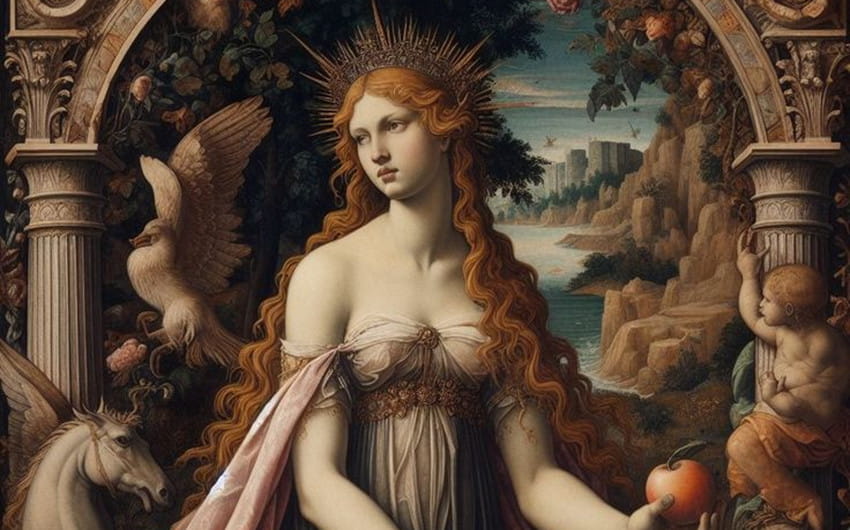
Adams First Wife Lilith: Myth Origins, Feminist Symbol, and Legacy in Jewish Folklore
When you search adams first wife, you’re stepping into one of the most fascinating and misunderstood stories in religious and mythological history. According to medieval Jewish folklore and mystical texts, Adam’s first wife was not Eve—but Lilith, a woman created from the same dust as Adam and meant to be his equal. Her refusal to submit led her to leave the Garden of Eden, transforming her into a powerful and controversial figure whose story continues to spark debate, symbolism, and reinterpretation today.
Why Lilith is called Adam’s first wife
In the Hebrew Bible, specifically the Book of Genesis, Eve is presented as Adam’s wife without any mention of another woman before her. However, later Jewish folklore noticed something curious: Genesis includes two different creation accounts. In one, man and woman are created together. In the other, Eve is created from Adam’s rib.
To explain this contradiction, medieval scholars and storytellers developed the idea that Adam had a first wife—Lilith—created at the same time and from the same material as him. This idea is most famously recorded in a medieval text known as The Alphabet of Ben-Sira, which became central to Lilith’s legend.
Lilith’s creation and claim of equality
Unlike Eve, who was formed from Adam’s body, Lilith was said to be created from the same dust as Adam. That detail is crucial. It established her as his equal in origin, not a derivative being.
According to the folklore, conflict arose almost immediately. Lilith refused to be subservient to Adam, especially in matters of intimacy. She argued that because they were created equally, neither should dominate the other. Adam disagreed and demanded authority.
If you look at this through a modern lens, it feels strikingly familiar—an argument about autonomy, power, and equality that still plays out today.
Lilith’s departure from Eden
Rather than submit, Lilith chose exile. She spoke the ineffable name of God—a forbidden act—and fled the Garden of Eden on her own will. This is one of the most radical elements of her story: she wasn’t cast out. She left.
In many versions of the myth, God sends angels to retrieve her and bring her back to Adam. Lilith refuses, choosing freedom even though it means separation, danger, and eventual demonization. That choice becomes the turning point where her image shifts from woman to monster in later traditions.
From independent woman to demonic figure
After leaving Eden, Lilith’s story takes a darker turn in Jewish mystical tradition. She becomes associated with the night, wilderness, and danger—particularly toward infants and pregnant women. Amulets and prayers invoking angelic names were historically used to ward her off.
This transformation raises an important question: why does a woman who refuses submission become a demon?
In many interpretations, Lilith’s demonization reflects social anxieties about female independence. Her refusal to obey established order made her dangerous—not because she was evil, but because she was uncontrollable.
Lilith’s roots in ancient mythology
Lilith didn’t appear out of nowhere. Her name and traits likely evolved from ancient Mesopotamian myths involving female night demons known as lilītu. These beings were associated with wind, illness, sexuality, and danger.
As Jewish culture encountered and absorbed surrounding mythologies, Lilith’s figure adapted and evolved. Over time, she became woven into Jewish folklore as a symbolic explanation for chaos, loss, and fear—especially fears tied to childbirth and sexuality.
Eve as Adam’s second wife
After Lilith’s departure, God creates Eve—not from dust, but from Adam’s rib. This origin story carries a very different message. Eve is physically derived from Adam, which some interpretations see as establishing hierarchy rather than equality.
In this framework, Eve becomes Adam’s second wife, created to avoid the conflict that arose with Lilith. She is portrayed as more compliant, more connected to Adam, and more embedded in the structure of Eden.
This contrast between Lilith and Eve has fueled centuries of discussion: independence versus harmony, equality versus order, rebellion versus obedience.
Why Lilith isn’t in the Bible
If Lilith’s story is so compelling, why isn’t she explicitly mentioned in the Bible?
The most likely answer is that her myth developed later, during the medieval period, through oral tradition, folklore, and mystical interpretation rather than canonical scripture. While the Bible focuses on theological foundations, folklore often fills in gaps—answering questions people kept asking but scripture didn’t address directly.
Lilith exists in that space: not official doctrine, but enduring cultural memory.
Lilith as a modern feminist symbol
In recent decades, Lilith has been reinterpreted in a completely different light. Instead of a demon, she’s seen as a symbol of autonomy, resistance, and female empowerment.
If you look at her story stripped of supernatural elements, it becomes a narrative about a woman who refused to accept inequality—even when compliance would have guaranteed safety and comfort. That makes her resonate strongly with modern readers, especially those interested in feminist theology and reinterpretations of ancient texts.
Today, Lilith appears in literature, art, music, and scholarship as a reclaimed figure rather than a feared one.
Psychological and symbolic interpretations
Some scholars view Lilith not as a literal figure, but as a psychological archetype. She represents the rejected aspects of human nature—the parts that refuse control, defy norms, and demand self-definition.
In this view, Eve and Lilith aren’t rivals but complementary symbols. Eve represents integration within structure, while Lilith represents freedom outside it. Both forces exist in tension within human societies—and within individuals.
Why people still search “adams first wife”
So why does this story continue to attract attention?
Because it challenges assumptions. It asks whether equality was present at humanity’s beginning. It questions how power dynamics become encoded into cultural stories. And it offers an alternative origin narrative that feels surprisingly modern in its themes.
When you search adams first wife, you’re not just looking for a name—you’re exploring how mythology, gender, authority, and storytelling intersect across thousands of years.
What Lilith’s story leaves you with
Whether you see Lilith as myth, metaphor, or misunderstood legend, her story endures because it speaks to something unresolved. It asks what happens when equality is denied. It asks who gets labeled dangerous—and why.
And perhaps most importantly, it reminds you that history isn’t only written in official texts. Sometimes, the most revealing stories survive in the margins.
Featured image source: Pinterest