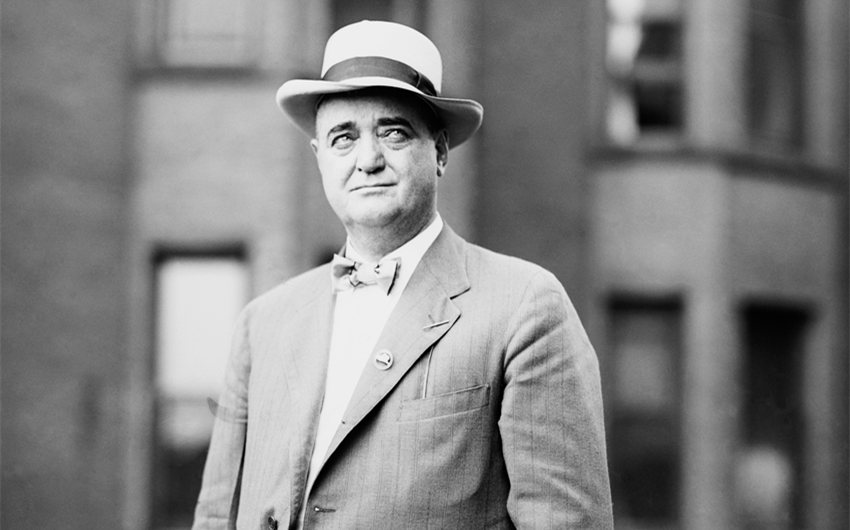
Bat Masterson Net Worth in 2026: Estimate and What His Money Likely Looked Like
If you’re searching bat masterson net worth, you’re asking a modern question about a man who died in 1921. Bat Masterson never published a financial statement, and there’s no reliable public record that totals his assets the way you could for a modern celebrity or business executive. What you can do is use the few documented income anchors from his later life to make a realistic conclusion: Masterson likely lived comfortably at times, but there is no provable evidence that he died extraordinarily wealthy by modern standards.
Who Was Bat Masterson?
Bat Masterson, born Bartholomew William Barclay Masterson, was a frontier-era figure who became part of Old West legend. He worked in several roles across his life: buffalo hunter, scout, lawman, gambler, and later a journalist and sportswriter in New York City. That “later New York career” is important because it shows his life didn’t end as a wandering gunslinger myth. He became a professional writer and a government employee, and he stayed employed into old age.
He died in 1921 after writing a column for the New York Morning Telegraph, which is a detail that reinforces the most practical takeaway: he was still working rather than living as a retired millionaire whose money did all the talking.
Estimated Bat Masterson Net Worth
The most responsible answer: Bat Masterson’s net worth is not verifiable in modern terms.
Some net worth sites publish clean numbers, but those figures are essentially guesses. For a historical figure from the early 1900s, you would need detailed estate records or a reliable asset inventory to make a credible claim, and that kind of documentation is not widely available in a way that supports a precise total.
A realistic way to describe it: Based on documented income sources, Masterson’s wealth at death likely looked more like comfortable middle-class savings than a dramatic fortune. The clearest publicly repeated income anchor is his federal appointment as a deputy U.S. marshal, which paid about $2,000 per year in the early 1900s. That salary suggests a solid living for the era, but not automatically the kind of wealth that becomes generational unless it’s paired with major property ownership or investments that we can actually prove.
Net Worth Breakdown
1) Government salary as a deputy U.S. marshal
One of the most concrete money facts in Masterson’s later life is that he held a federal position as a deputy U.S. marshal in New York. In historical summaries, this role is described as paying about $2,000 per year during the period he served.
To understand what that means, think of it as a respectable salary, not a jackpot. It likely provided stable income and social position, but it wasn’t the kind of compensation that automatically creates a massive estate unless the person invests extremely well or accumulates valuable property over time.
It also wasn’t a lifelong salary. He held the role for a limited period, meaning it functioned as a stable income window rather than a permanent pension-like wealth engine.
2) Sportswriting and newspaper work in New York
Masterson’s later career as a sportswriter and editor at the New York Morning Telegraph is another key wealth clue. Newspaper work can provide steady income, and the fact that he was described as a prominent figure suggests he wasn’t at the bottom of the pay scale.
However, his exact salary from journalism is not clearly documented in the public record in a way that lets you do clean math. Without a known number, the most realistic conclusion is that journalism gave him stable cash flow and social access rather than an easily measurable fortune.
3) Gambling and the myth-versus-money problem
Masterson is often described as a gambler, and this is where mythology can distort net worth assumptions. Gambling can produce bursts of income, but it can also produce losses, and it rarely leaves clean paper trails—especially not a century later.
People imagine “Old West gambler” and assume huge piles of cash. In reality, gambling wealth is hard to prove, hard to preserve, and often inconsistent. Masterson’s documented later-life employment suggests he relied on real jobs and consistent work, not a permanent stream of gambling winnings.
4) Property and investments: what we can’t confirm
With modern net worth topics, you can usually triangulate property ownership, businesses, investments, and public filings. With Bat Masterson, you mostly can’t. There isn’t a widely confirmed inventory of what he owned at death, nor a public estate valuation that can be used as a trustworthy anchor.
This is why any precise dollar figure you see online should be treated cautiously. Without confirmed assets and liabilities, those numbers are more “content filler” than documented financial history.
5) The most realistic conclusion about his wealth
When you combine what is actually known—steady employment in government and journalism, the fact that he remained active and working, and the lack of clear evidence of major owned assets—you get a picture of someone who likely lived comfortably for his time but not someone whose wealth can be confidently described as enormous.
He may have had savings. He may have had periods of higher cash flow. But the public record doesn’t support a precise, credible net worth number.