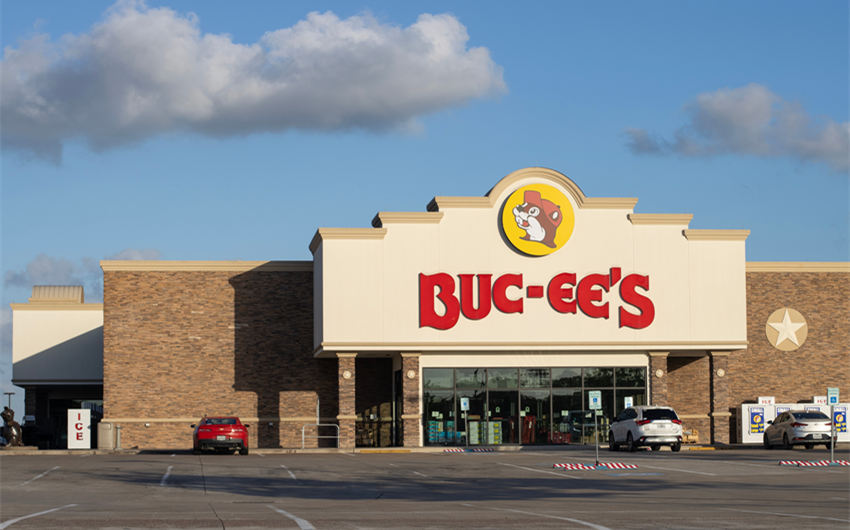
Buc-ee’s Net Worth in 2026: Estimated Company Value and Wealth Breakdown
If you’re searching buc ee’s net worth, you’re really asking what a wildly popular private company might be worth if it ever put a number on itself. Buc-ee’s doesn’t publish financial statements, isn’t publicly traded, and hasn’t confirmed an official valuation. That means every “net worth” figure you see is an estimate. Still, there are enough public clues about scale, store economics, and expansion plans to explain why most estimates sit in the multi-billion-dollar range.
What Is Buc-ee’s?
Buc-ee’s is a Texas-born chain of massive travel centers known for oversized stores, huge fuel canopies, famously clean restrooms, and a high-margin retail mix that includes fresh food and signature snacks such as Beaver Nuggets. The company emphasizes a “clean, friendly, and in stock” model and has built a reputation as much for the experience as for the convenience.
What started as a Texas cult favorite has expanded into a multi-state destination brand. Public location tracking in late 2025 counted more than 50 Buc-ee’s locations nationwide, with Texas still holding the largest share. Expansion has continued, with business coverage describing plans to open locations in additional states across 2026 and 2027. That growth is a major reason people assume the company’s value is rising quickly.
Estimated Buc-ee’s Net Worth
Most commonly cited estimate range: roughly $2 billion to $3 billion for the company’s overall value.
Because Buc-ee’s is private, there is no official “market cap” the way there would be for a publicly traded company. But valuation-style discussions that imagine a hypothetical IPO often place it around the $2 billion level, and many online estimates expand that to a $2–$3 billion discussion range.
Important reality check: treat $2–$3 billion as a responsible public estimate range, not a confirmed valuation. The true number could be higher or lower depending on how profitable each store is, how much real estate the company owns versus leases, and how investors would price a one-of-a-kind retail brand with cult-level loyalty.
Net Worth Breakdown
1) Store-level revenue power (the core value driver)
Buc-ee’s is not built like a typical convenience store. A single location functions like a highway retail anchor: fuel plus a massive indoor shopping experience that includes hot food service, snacks, and branded merchandise.
One of the clearest public clues about how strong the stores can be came from reporting on a proposed Buc-ee’s in Colorado. A local impact analysis referenced in coverage estimated the site could generate about $31.8 million in annual revenue excluding gas sales in its first full year. That detail matters because it highlights how much Buc-ee’s can earn from the inside of the store alone, where margins are typically better than fuel.
When you multiply that kind of in-store revenue potential across dozens of high-traffic sites, the idea of a multi-billion-dollar valuation starts to make sense.
2) High-margin merchandise and “destination shopping” economics
Most gas station brands sell convenience items. Buc-ee’s sells a shopping trip. Its stores are built to encourage customers to browse and buy more than they planned: snacks, jerky, baked goods, BBQ, souvenirs, branded apparel, seasonal items, and a long lineup of private-label style products.
That matters because merchandise and prepared food typically deliver higher margins than fuel. In valuation terms, this helps explain why Buc-ee’s is often talked about less like a gas station chain and more like a specialty retailer attached to a fuel business. Higher-margin categories support stronger profits, which supports higher company value.
3) Fuel sales and traffic (the engine that feeds the store)
Fuel is often a lower-margin category, but it’s a traffic machine. Buc-ee’s locations typically feature extremely large pump counts, designed for high throughput. That steady flow of customers is the foundation that makes the in-store business work. People stop for gas, then they walk into a store that’s designed to capture retail spending.
In simple terms, fuel brings the crowd; the store captures the profit. That system is one reason the Buc-ee’s model has proven so powerful.
4) Real estate value and site strategy
A hidden part of the valuation conversation is real estate. Large-format highway sites in high-traffic corridors can be valuable assets, especially if the company owns the land and buildings. Owned real estate can add value beyond annual profit because it can appreciate over time and provide long-term stability.
Because Buc-ee’s does not publicly disclose the ownership structure for each location, outside estimates can swing. A company that owns a significant amount of its real estate can be worth more than one that mainly leases, even if their operating profit looks similar.
5) Expansion and “future earnings” value
Valuations are not only about what a company earns today. They’re also about what it’s expected to earn tomorrow. Buc-ee’s is in a rapid expansion phase, and business coverage has described plans to enter multiple new states across 2026 and 2027.
This matters because every successful new location potentially adds another large revenue engine. If those stores perform like the established Texas megastores, the company’s future profit base grows quickly, and so does its implied valuation.