Francisco Goya Wife: The Story of Josefa Bayeu and the Woman Behind the Master
When you search for “Francisco Goya wife,” you’re diving into the personal life of one of Spain’s most influential and complex artists. Francisco de Goya y Lucientes, often called the father of modern art, was known for his powerful paintings that blended realism, emotion, and social commentary. Yet behind his masterpieces and turbulent career was a woman who quietly shaped much of his life — Josefa Bayeu, his wife.
While history tends to focus on Goya’s artistic genius and controversial works, Josefa’s presence was constant through his early struggles, his rise to fame, and his personal hardships. Her story offers a glimpse into the private side of an artist whose work mirrored both beauty and darkness. Understanding who Josefa Bayeu was — and how she influenced Goya — helps us see the human being behind the legend.
Who Was Francisco Goya?
Francisco José de Goya y Lucientes was born on March 30, 1746, in Fuendetodos, a small village in Aragon, Spain. His journey from humble beginnings to becoming the official painter to the Spanish court was one of talent, determination, and resilience.
He trained in Zaragoza under José Luzán and later studied in Madrid, where he learned from established artists and absorbed the influence of masters like Velázquez and Rembrandt. Early in his career, he worked on religious frescoes and tapestry designs, but it was his portraits and social commentaries that eventually set him apart.
By the late 18th century, Goya had become one of Spain’s most celebrated painters. His portraits of royalty and aristocrats captured not just appearance but personality — sometimes unflatteringly so. His later works, however, took a darker turn, reflecting war, suffering, and the human condition with unflinching honesty.
But long before fame and recognition, there was Josefa Bayeu — the woman who married him when he was still finding his place in the world.
Who Was Josefa Bayeu?
Josefa Bayeu y Subías was born in Zaragoza in 1747, the daughter of a craftsman. She came from an artistic family; her brother, Francisco Bayeu, was a prominent painter and a key figure in Goya’s career. Francisco Bayeu served as a court painter and teacher at the Royal Academy of Fine Arts of San Fernando in Madrid — a position that would later help open doors for his brother-in-law.
Josefa, affectionately known as “Pepa,” grew up in an environment surrounded by art, discipline, and religious devotion. Although not much is known about her personal writings or opinions, surviving records and letters paint her as loyal, modest, and supportive — a true partner to Goya during both his artistic rise and his struggles.
Their Marriage and Early Years Together
Francisco Goya married Josefa Bayeu in 1773, when he was in his late twenties. Their union not only connected him to one of Spain’s most respected artistic families but also provided a foundation of emotional and social support.
The couple settled in Madrid, where Goya began working under the influence and guidance of Josefa’s brother, Francisco Bayeu. Through this connection, Goya was able to secure commissions from the Royal Tapestry Factory — work that gave him financial stability and introduced him to high-ranking patrons.
The early years of their marriage were challenging but filled with ambition. Goya was still proving himself as an artist, often traveling for work and accepting demanding commissions. Josefa remained at home, managing the household and raising their children.
Tragically, the couple endured immense personal loss. Out of their seven children, only one — Javier Goya — survived into adulthood. The repeated loss of their infants deeply affected both parents and would later echo in the somber tone of many of Goya’s works.
Josefa’s Quiet Influence
While Josefa Bayeu was not an artist herself, her influence on Goya’s life cannot be understated. She was his emotional anchor through years of instability, illness, and political turmoil.
When Goya suffered a mysterious illness in 1793 that left him permanently deaf, Josefa was by his side. His deafness marked a major turning point in his life and art — pushing him toward introspection and the darker, more haunting imagery that would define his later years.
Historians believe Josefa’s care and companionship helped him recover physically and emotionally during this period. She managed their household and continued supporting his demanding work schedule even as his health fluctuated.
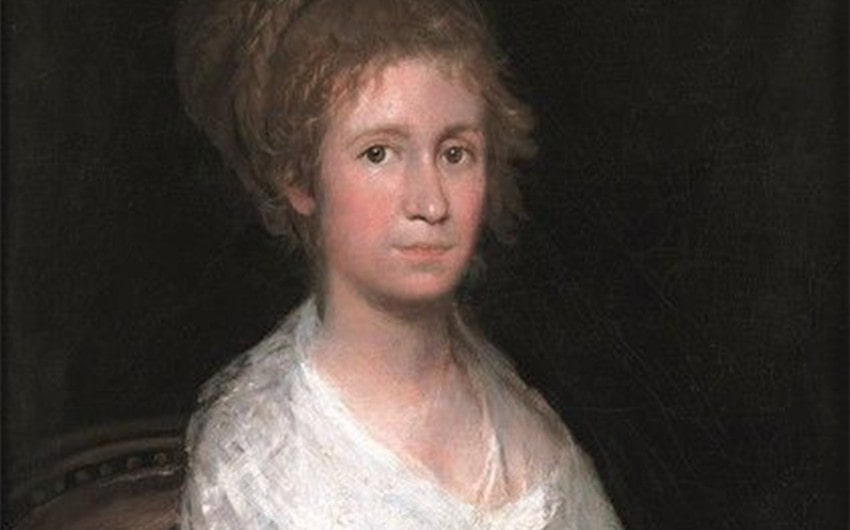
Some art historians also suggest that Josefa may have been the inspiration for several of Goya’s early portraits of women. While there is no confirmed portrait of her painted by Goya, her presence seems to echo through many of his more tender, human depictions of female subjects.
A Complicated Marriage
Like many long marriages, Goya and Josefa’s relationship wasn’t without strain. Goya’s intense personality, health issues, and later political troubles likely tested their bond. As his fame grew, so did his social circle — which included members of the Spanish aristocracy and liberal intellectuals.
There are rumors and scholarly debates about Goya’s possible romantic relationship with the Duchess of Alba, one of his most famous subjects. While some claim their connection was purely artistic, others believe it may have been more personal. However, there is no definitive proof of an affair, and during that time, Goya remained married to Josefa.
Despite speculation, Josefa never sought public attention or involvement in her husband’s social affairs. She remained a private figure, focused on family and domestic life. Her quiet endurance through public gossip and personal hardship reflects the depth of her strength and commitment.
Josefa’s Death and Goya’s Later Years
Josefa Bayeu passed away in 1812 at the age of 65, leaving Goya widowed after nearly four decades of marriage. Her death marked another period of grief and isolation for the artist.
After her passing, Goya’s work became even darker and more introspective. He produced his famous “Black Paintings” series — deeply emotional, haunting works painted directly on the walls of his home. These paintings reflected despair, fear, and the turbulence of his inner world, shaped by war, politics, and loss.
Though he eventually left Spain and spent his final years in France, Goya remained connected to the memory of Josefa and their only surviving son, Javier. Javier continued the family’s artistic lineage through his own work and through Goya’s grandchild, Mariano Goya.
The Legacy of Josefa Bayeu
While Josefa Bayeu’s life may not have been documented in great detail, her impact on Francisco Goya’s life and art is undeniable. She was a constant source of stability during his rise from an ambitious artist to one of Spain’s greatest painters.
Her quiet resilience through personal tragedies — losing six children, coping with her husband’s illness, and enduring the pressures of public life — speaks to the strength of a woman who lived largely in the shadows of genius.
In many ways, Josefa represents the countless women throughout history whose stories are intertwined with great artists but who remain largely invisible in historical accounts. Without her presence, Goya’s life and legacy would likely have been far different.
Goya’s Reflections on Love and Humanity
Even though Goya’s art is often remembered for its stark realism and social critique, much of it is deeply human — and perhaps informed by his own personal relationships. His ability to portray both beauty and brutality suggests a man who had lived deeply, loved fiercely, and suffered greatly.
Josefa’s life with him was not one of fame or glamour, but of endurance, devotion, and quiet love — qualities that shaped the emotional foundation of his art.
Today, when people remember Goya’s masterpieces, they also remember the deeply personal journey behind them — a journey that Josefa Bayeu shared, supported, and influenced in countless unseen ways.
Featured image source: Pinterest