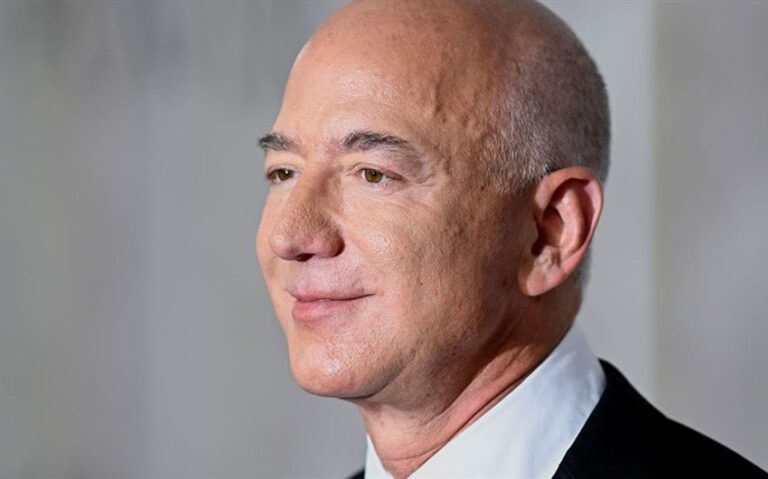
Steve Eisman Net Worth in 2026: Estimate and How He Made Money
Steve Eisman is famous for seeing the subprime disaster before the rest of Wall Street—and for having the conviction to bet against it. That’s why steve eisman net worth gets searched so often. The catch is simple: Eisman has never published a verified personal net worth, and the internet is full of wildly conflicting “estimates.” What you can do is separate what’s documented (his career, the size of funds he managed, and the firms he worked at) from what’s speculative (the exact size of his personal fortune).
Who Is Steve Eisman?
Steve Eisman (born July 8, 1962) is an American investor best known for shorting mortgage-related products ahead of the 2007–2008 financial crisis. He became a prominent character in Michael Lewis’s book The Big Short, and the 2015 movie adaptation fictionalized him as “Mark Baum,” played by Steve Carell. You’ll often see him described as a hedge fund manager and financial-services specialist who gained fame for taking on the housing bubble when it was still considered untouchable.
Career-wise, his public timeline is fairly clear. He rose to prominence at FrontPoint Partners (a hedge fund that became closely associated with the “big short” trade), later launched his own fund Emrys Partners, and then joined Neuberger Berman in 2014 as part of a private-wealth portfolio management group. Public biographies note that by 2010 he managed more than $1 billion at FrontPoint, and that Emrys was ultimately wound down after reaching roughly the high hundreds of millions in assets at peak. For example, Reuters reporting on the Emrys shutdown described the fund as closed after a relatively short run, and other coverage pegged Emrys around roughly $185–$200 million in assets before it was dissolved.
Those AUM numbers matter for context, but they’re often misunderstood. Managing $1 billion is not the same thing as personally being worth $1 billion. Most of that money belongs to clients, not the manager.
Estimated Steve Eisman Net Worth
There is no verified public net worth for Steve Eisman. What exists are published estimates that are all over the map:
High-end online claims: Some websites assert Eisman is worth roughly $1.5–$1.6 billion. These numbers circulate widely, but they are typically not backed by transparent sourcing, audited records, or direct disclosures.
More conservative online claims: Other net worth publishers place him closer to $150 million (sometimes $150–$200 million). These are also unverified, but they tend to “feel” more consistent with what’s publicly documented about his career: hedge fund management, a famous trade, and years of senior investment roles—without any public indication that he owns a multi-billion-dollar stake in a company or a giant pool of personal equity.
A responsible way to summarize it: Eisman’s net worth is best described as unknown, with public estimates ranging from the high eight figures to the low nine figures on the conservative side, and as high as the low billions on the aggressive side. The billionaire claims are the least substantiated and most easily inflated by misunderstanding how hedge funds and portfolio management actually pay.
Net Worth Breakdown
1) The “Big Short” profits (big headline, unclear personal take)
The trade that made Eisman famous—betting against subprime mortgage exposure—was massively profitable for the investors who were positioned correctly. But here’s what gets lost in internet net worth math: hedge fund managers don’t automatically keep the entire profit of a trade. They earn a combination of compensation, management fees, and performance fees (if applicable), depending on fund structure and terms with investors.
So yes, the crisis-era short was a defining wealth event, but it doesn’t automatically translate into billionaire status. Without knowing the exact fund terms, the exact investor profit, and Eisman’s personal capital in the trade, you cannot convert fame into a precise net worth number.
2) Hedge fund compensation at FrontPoint (fees and senior pay)
By 2010, Eisman was reported to be managing more than $1 billion at FrontPoint. That level of responsibility usually comes with strong compensation—base pay plus bonuses and potentially a share of performance economics, depending on the firm’s setup. But “managed more than $1 billion” is often misread online as “owned $1 billion.” In reality, it points to professional seniority and income potential, not automatic personal wealth at that scale.
FrontPoint itself had sizable assets as a firm (reported around $7 billion in that era), and Eisman was one of the key portfolio managers associated with its most famous trade. That’s enough to justify a substantial personal fortune, but not enough—on its own—to confirm a billionaire net worth.
3) Emrys Partners: founder economics, but smaller AUM
Eisman launched Emrys Partners in 2012 with relatively modest seed capital and later grew the fund. Coverage around its shutdown in 2014 described Emrys as reaching roughly the high hundreds of millions at peak, with widely cited figures around $185–$200 million as it was being wound down. That’s meaningful, but it’s not a mega-fund.
From a net worth perspective, Emrys likely contributed in a few ways: the founder’s income from fees, any gains on Eisman’s personal money invested alongside clients, and the professional value of building and running a fund—even if it ultimately closed. But again, the AUM size supports a “wealthy investor” narrative more than a “billionaire” narrative.
4) Neuberger Berman and private-wealth portfolio management income
After Emrys, Eisman joined Neuberger Berman in 2014 as a managing director and portfolio manager within a private-wealth structure. This type of role can be lucrative, but it’s a different model than running a classic hedge fund: compensation is typically salary/bonus plus incentives tied to client relationships and performance, rather than the same high-fee hedge fund structure people imagine when they hear “Big Short investor.”
In other words, it can be excellent money, but it doesn’t automatically create the kind of exponential owner-equity wealth you see when someone founds a firm they later sells for billions.
5) Public commentary and media projects (incremental, not usually the main driver)
Eisman has remained a visible market voice through media appearances and commentary, and later he launched a podcast project as well. These activities can add income—through appearances, speaking engagements, sponsorships, or platform monetization—but for most finance professionals, media is a secondary stream compared with investment compensation and capital gains.
6) The key reason estimates are unreliable: assets, liabilities, and private investing
Net worth is assets minus liabilities. For someone like Eisman, the biggest unknowns are private: how much personal capital he invested in his funds, what he earned across different fee structures, what he saved versus spent, what he owns in real estate and investments, and how those investments performed over time. None of that is publicly itemized in a way that lets you calculate a verified number.
Featured Image Source: https://www.businessinsider.com/tariffs-big-short-steve-eisman-trump-trade-stock-market-outlook-2025-4